Built for the newborn fog
Track every feed, pump and diaper — together.
One shared log for both caregivers, with the day's totals and trends you actually need at the next pediatrician visit.
See it in action
A day of tracking for a sample baby, Allison — logged in seconds, summarised automatically.
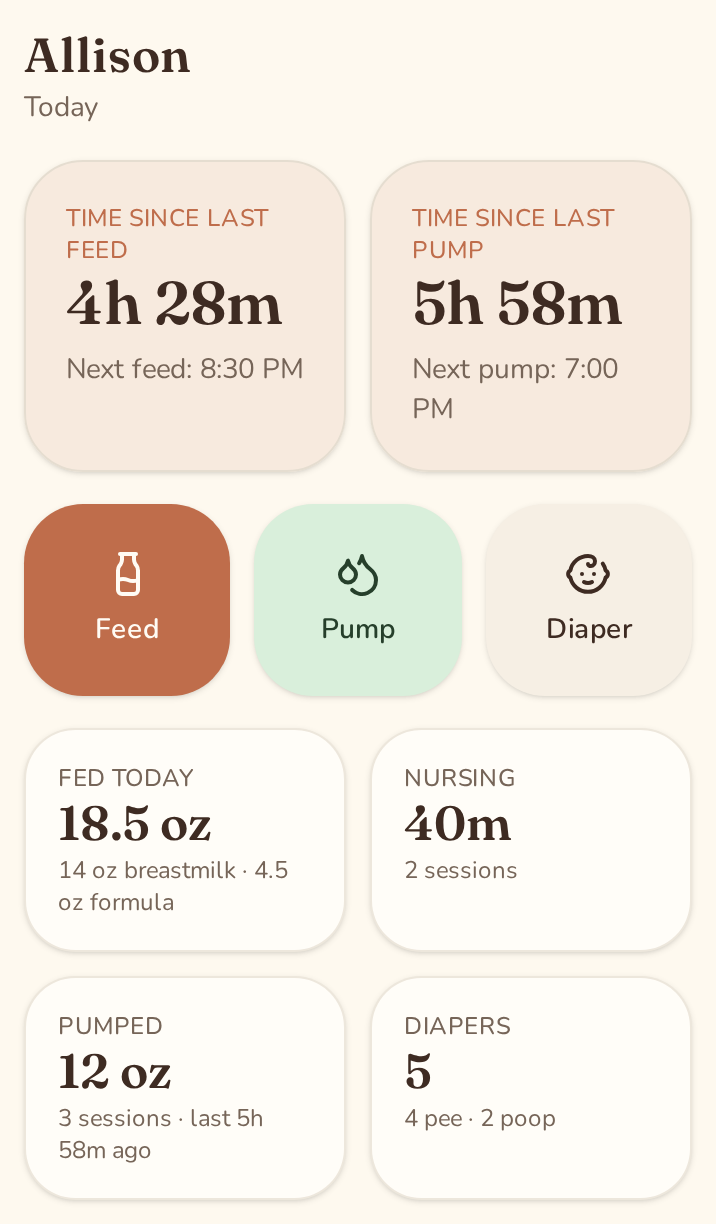
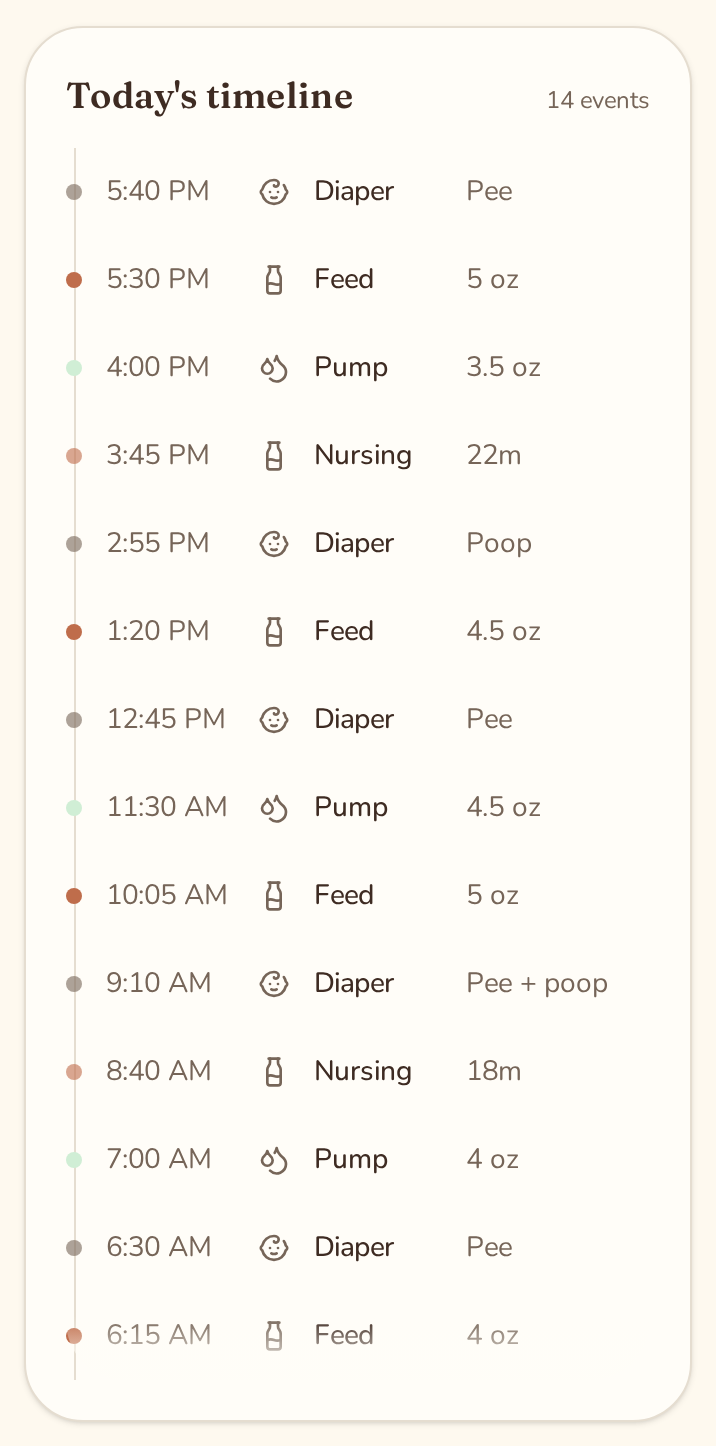
Feeds in two taps
Bottles in oz or mL, plus a nursing timer that survives a refresh.
Pumping output
Volume, duration and side per session, totalled for the day.
Diaper counters
Pee, poop or both — with running counts you can trust at 3am.
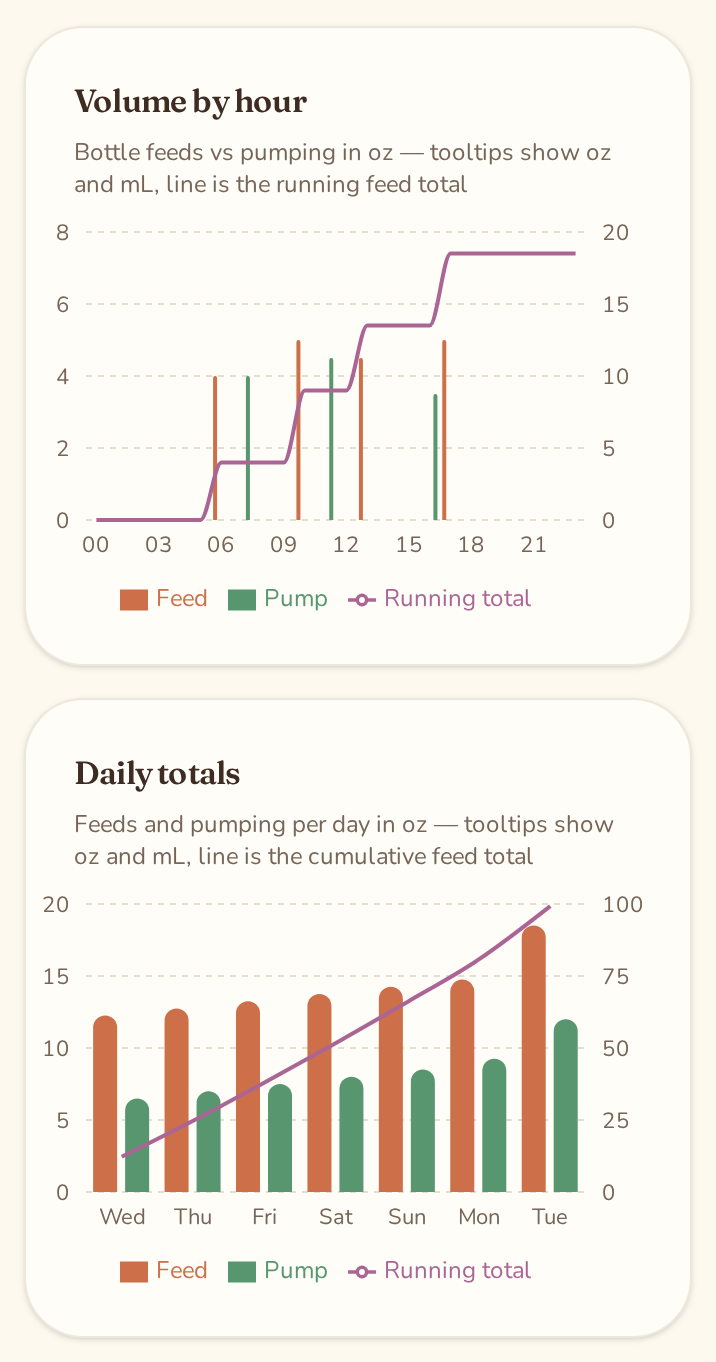
Real charts
Hour-by-hour today, stacked daily totals across the week.
Shared log
Invite a partner or caregiver; everyone writes to the same record.
Why Nestli exists
I'm a data engineer who became a dad. Three days in, my wife asked how much our daughter took at the last bottle and I genuinely didn't know — we'd both been up, we'd both fed her, and neither of us knew what the other had done. Notepads got left downstairs. Shared phone notes turned into a wall of timestamps. At the two-week appointment the pediatrician asked how she'd been eating and we guessed.
So Nestli was built around two rules. First, logging has to survive 3am: one arm holding a baby, one thumb, four seconds of attention — a bottle is two taps, and a nursing timer keeps running through a lock screen or refresh. Second, nobody should be the keeper of the information: both caregivers write to the same live record, so the 2am feed is simply there in the morning without a handoff debrief.
What it deliberately doesn't do is tell you what the numbers mean. It shows what happened — today's totals, an hour-by-hour view, a week of daily bars — so you can read the answer straight off the screen when someone asks.
Read the full story →How Nestli compares
Most baby trackers do a little of everything, then put the parts new parents need most behind a paywall. Nestli concentrates on the three things you log dozens of times a day and keeps them fast, dual-unit, and shared.
- Real-time partner sharing, included. Typical free tiers charge for a second caregiver; paper logs can't sync at all.
- Formula, breastmilk, or a blend. Split a blended bottle by volume so intake is recorded accurately, not approximated.
- Pumping tracked like feeds. Session count and output in the same units, side by side with intake.
- Oz or mL with one tap. The display options bar flips every chart, KPI and total — no digging through settings.
- Feed and pump interval reminders. Time since the last session, the next scheduled time, and a push when one is past due.
- No install, any device. Runs in the browser on phone, tablet and desktop — send your partner a link and they're in.
New parent guides
Practical tracking tips you can use whether you log in Nestli or on paper.